
There are festivals where you arrive with a list of artists you want to see, spend three days moving between stages and head home with a collection of favourite performances.
Then there is The Long Road.
By the time the gates closed at Stanford Hall on Sunday night, more than 40,000 attendances had been recorded across four days of country, Americana and roots music. There had been headline sets, emerging artists, rain, sunshine, late nights, line dancing, unexpected collaborations and more than a few muddy boots.
Yet reducing The Long Road 2026 to its line-up would miss much of what makes the festival increasingly important to country music in the UK. The lasting impression was of a community that has grown alongside the music itself.
And this year, perhaps more than ever, that mattered.
A festival finding its place
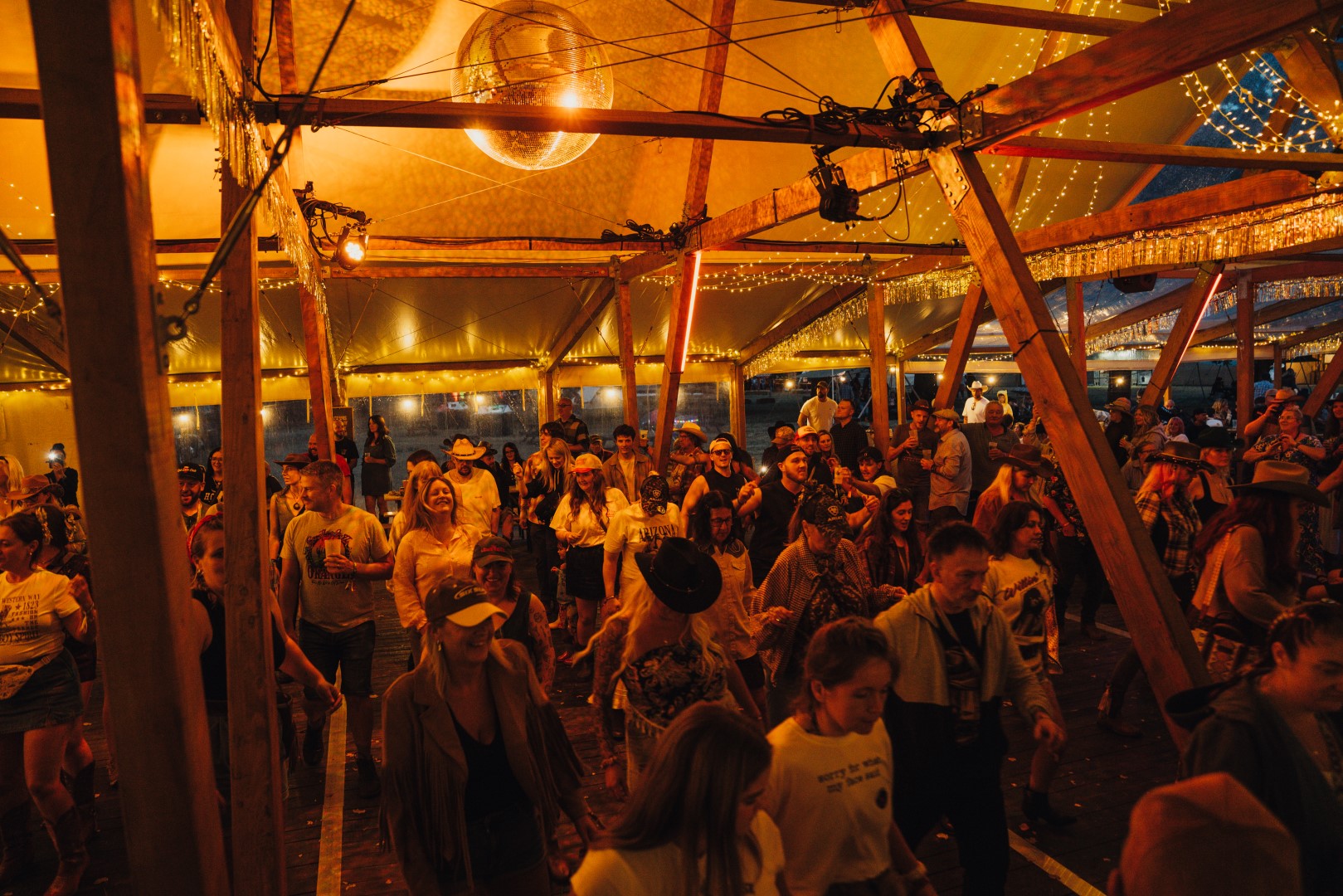
The Long Road has always occupied a slightly different space in the UK festival calendar. Stanford Hall doesn’t simply become a collection of stages for a weekend; it becomes a temporary country music town.
The Rhinestone Stage may be its focal point, but wandering away from it is half the experience. The Front Porch, Interstate, smaller performances, dancing, food, cars and bikes and the conversations taking place between them mean there is rarely a single “correct” way to spend a day.
The festival’s own post-event message described 2026 as its biggest Long Road yet, while emphasising that whether someone had attended since the beginning in 2018 or was making their first visit, they were equally part of it. And there were plenty of fans (and artists) who had been at the 2018 event, and kept returning year after year.
That sense of belonging isn’t simply marketing copy. You see it walking around Stanford Hall. Artists watch other artists. Musicians who have finished their sets appear elsewhere around the site. Fans recognise one another from previous festivals. People who arrived alone find themselves talking to strangers about what they have just heard.
Creative Director Baylen Leonard summed it up in the festival’s official recap, describing The Long Road as somewhere people can feel “accepted, connected and part of something special”, adding that there is a sense of “coming home” to the festival.
After spending a weekend there, it is difficult to disagree.
British country takes the main stage
There was plenty of international star power in 2026, but one of the most significant moments came before the weekend had really got going.
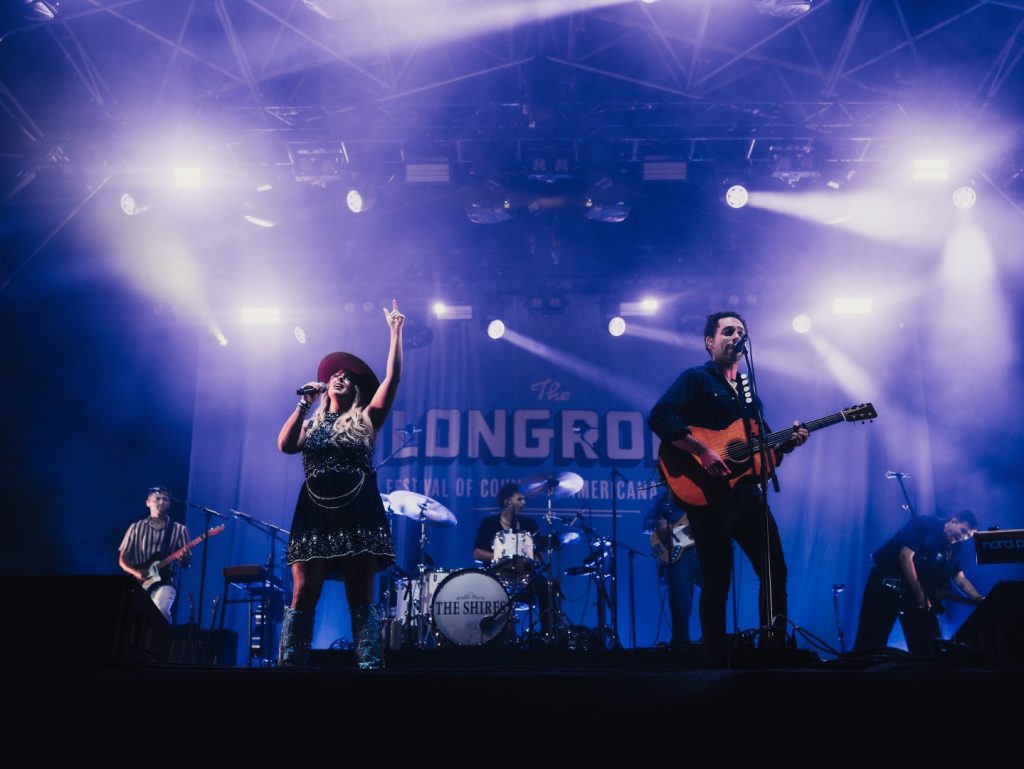
The Shires headlining the Rhinestone Stage on Friday night mattered.
Not simply because Ben Earle and Crissie Rhodes delivered a major festival headline performance, but because of what their presence there represented. A British country duo at the top of the bill at one of the country’s most important country festivals would once have seemed exceptional.
Now it felt entirely natural.
The official festival recap described their progress as symbolic of the extraordinary growth of country music in the UK. And there was another neat illustration of that journey on Saturday, when First Time Flyers reached the Rhinestone Stage after previously playing every other stage at The Long Road.
Those stories matter because festivals do more than present established stars. At their best, they create ladders.
The Long Road increasingly has one.
From Homegrown winner to the Rhinestone Stage
Nowhere was that clearer than in the Homegrown Country Music Contest.
Hosted this year by Janet Devlin, the competition again gave emerging UK artists a platform in front of a festival audience, with Josh Beer eventually taking the 2026 title after a closely contested final.
But perhaps the most persuasive argument for the competition was standing elsewhere on the site.
Last year’s winner Liam Price returned in 2026 — except this time he was performing on the Rhinestone Stage.
The festival itself understandably celebrated the full-circle moment: from winning Homegrown to playing the main stage a year later.
For a British country scene that needs genuine routes for new artists to progress, that’s far more valuable than simply handing somebody a trophy.
And throughout the weekend there were reminders that discovery remains one of The Long Road’s great pleasures. The enormous names might sell tickets, but some of the most animated conversations afterwards inevitably begin with: “Did you see…?”
Stars, surprises and songs
Of course, there were plenty of moments on the big stages that justified the anticipation.
Steve Earle brought decades of songwriting and storytelling to Friday, while The 502s supplied a very different sort of energy. Harleymoon Kemp commanded The Interstate and Chanel Yates demonstrated again why she is attracting so much attention.
Saturday offered one of those combinations that could probably only happen at a festival like this.
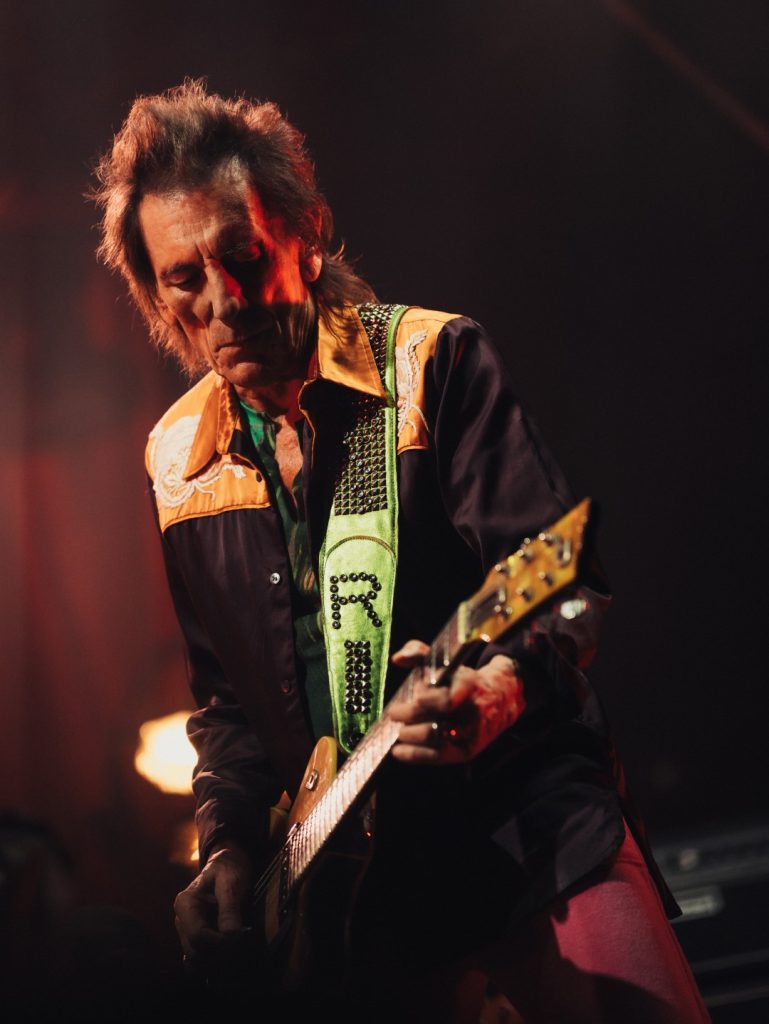
Ronnie Wood opened with It’s Only Rock ‘n’ Roll (But I Like It), moved into Willie Nelson’s On The Road Again and was joined by Imelda May for a series of songs. Their performance of 9 to 5 became one of the weekend’s most poignant moments.
Elsewhere, Josh Ross showed exactly why his profile continues to grow, while Australia’s Hayley Jensen, Twinnie, Jason and The High Heat and Dawson Anderson demonstrated just how wide The Long Road’s interpretation of country and roots music can stretch.
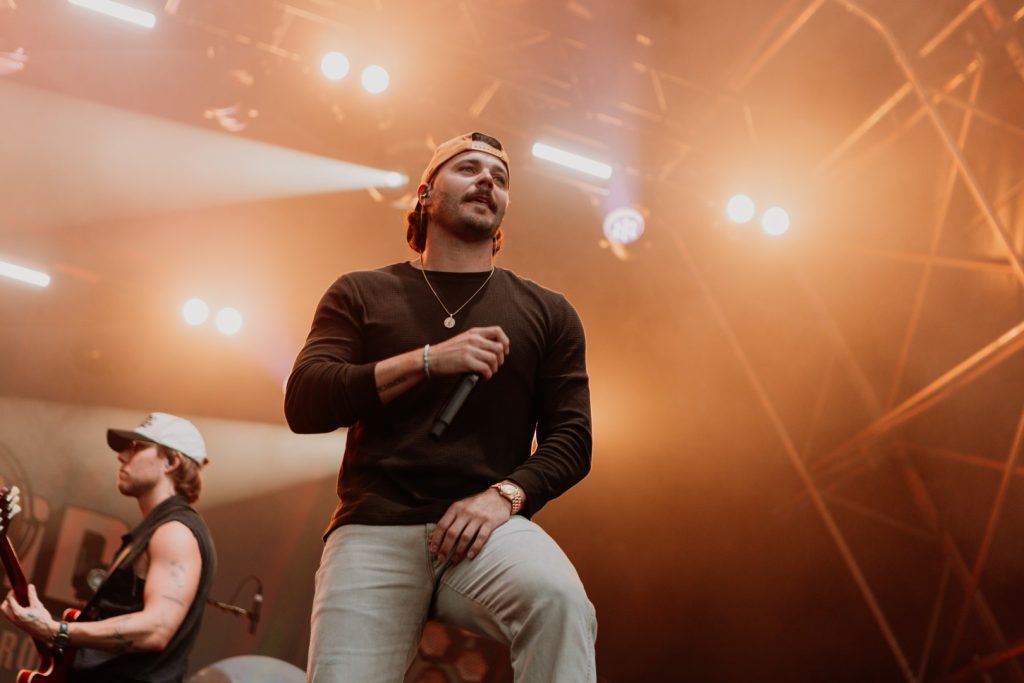
That breadth is important. Traditional country sits alongside Americana, folk, rock and contemporary country without the festival seeming particularly interested in drawing hard boundaries between them.
The common denominator is the song.
A weekend remembering Dolly
There was, however, one presence felt across Stanford Hall despite her absence.
Dolly Parton.
Coming only days after her death, the festival inevitably became a place where artists and fans could collectively process the loss of someone whose influence reaches far beyond country music.
Tributes appeared throughout the weekend, but one of the simplest proved among the most affecting.
The Dolly Forever wall invited festival-goers and performers to leave messages and memories. By the end of the weekend it had become a physical record of what Dolly meant to thousands of people — not merely as a performer, but as a songwriter, personality and inspiration. The festival’s own public message afterwards specifically thanked everyone who had contributed to it.
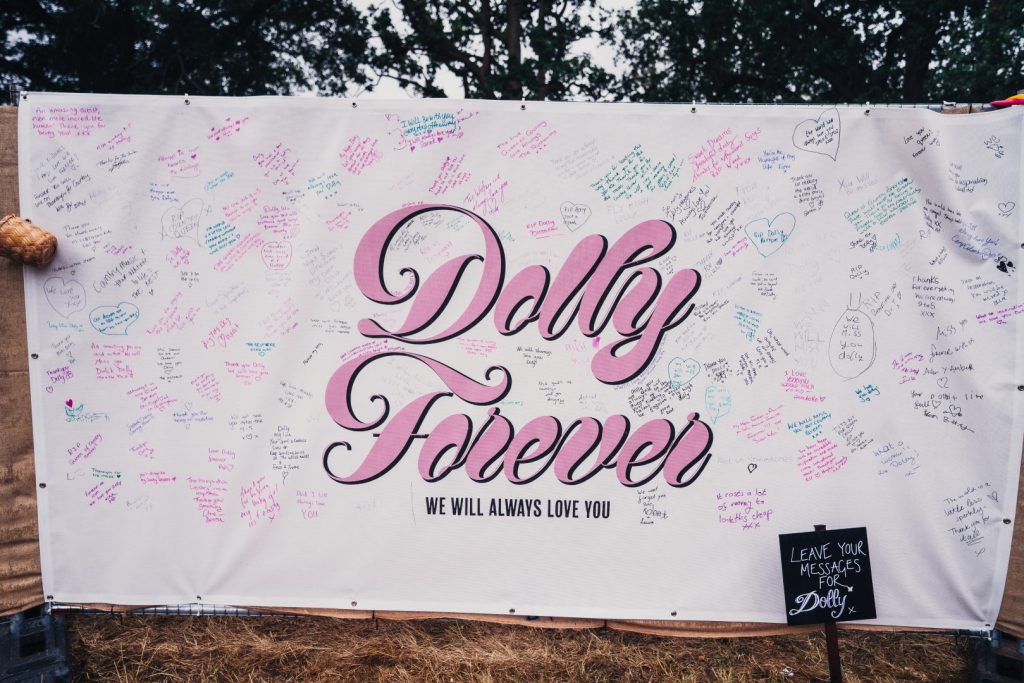
The photographs tell part of the story too: one of the festival’s post-event images shows the large Dolly Forever – We Will Always Love You wall covered from end to end in handwritten messages.
On Sunday, that collective remembrance found its most powerful musical expression.
Emmylou Harris, appearing at The Long Road for the final UK show of her European farewell tour, had both the history and personal connection to make her tribute uniquely meaningful. She performed When We’re Gone, Long Gone, a song originally recorded with Dolly, as Stanford Hall was illuminated in pink.
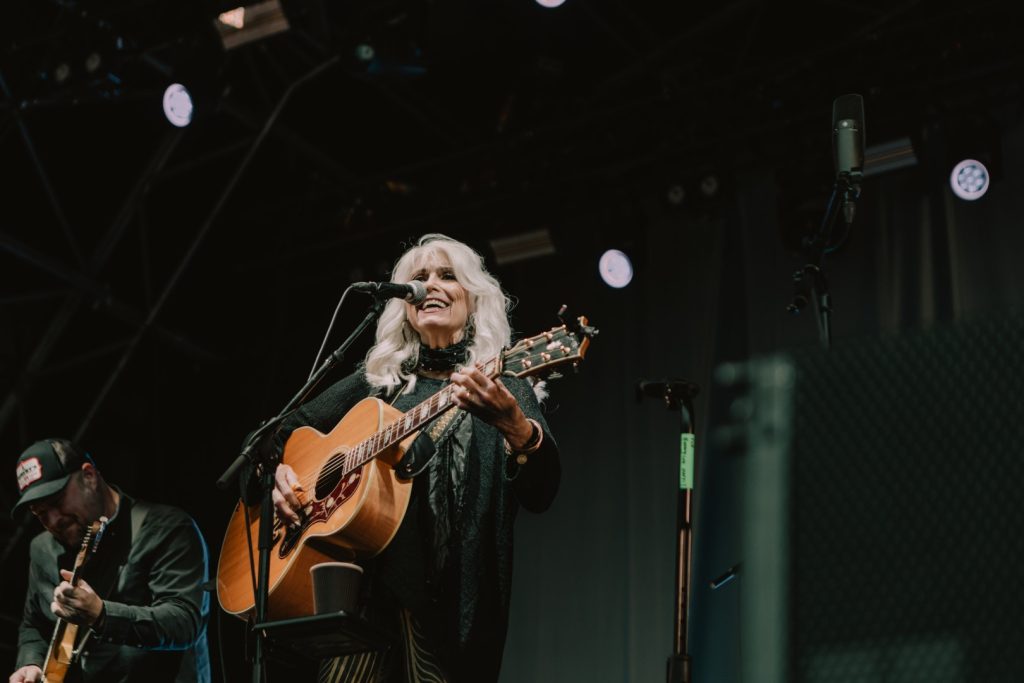
It was one of those festival moments that could never really have been programmed in advance.
Maren Morris brings the weekend home

Sunday’s headline belonged to Maren Morris, whose UK-exclusive appearance brought songs including The Middle, The Bones and My Church to the Rhinestone Stage.
Around her, the final day continued the mixture that had defined the weekend. Ryan and Rory brought energy, The Brothers Comatose supplied their distinctive folk sound and Lily Fitts offered something altogether more understated.
By then, though, the strange rhythm of a festival’s final day had taken hold.
Everyone is still watching music, discovering artists and making plans for the evening, while simultaneously becoming aware that the temporary world built around them is about to disappear.
At The Long Road, that feeling seems particularly pronounced.
Rain doesn’t stop The Long Road
And yes, it rained.
This was an August Bank Holiday festival in England, after all.
The weather moved through seemingly every available setting, but if anything it became part of the story. The festival’s recap talks of fans singing in the rain, dancing when the sunshine returned and making new friends beneath rainbows.
The organisers’ message to festival-goers afterwards perhaps captured it better. They wrote about the people who return every year, those travelling huge distances, people arriving alone and finding their tribe, families establishing traditions, artists, crew, volunteers and traders — and how all of that carries the festival through “the rain and the storms” until the sun returns.
Anyone who has attended a British festival knows that weather can change the atmosphere remarkably quickly.
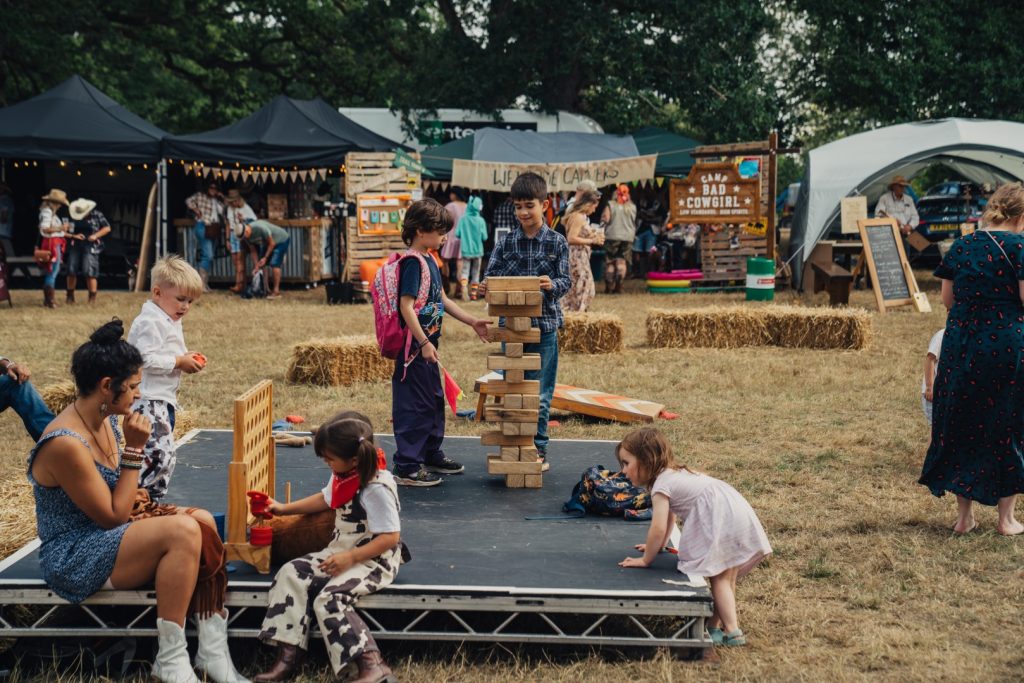
At Stanford Hall, people simply put another layer on.
The Long Road after midnight
The headline performances inevitably dominate photographs and social media, but some of the character of The Long Road emerges once you stop thinking about it purely as a concert.
The official recap lists everything from the car and bike show and Smoke & Fire BBQ experience to eating competitions and sold-out sittings at the Red Dog Saloon. Days could stretch from 11am crafts and line dancing on The Front Porch to afterparties still going at 1am.
That matters because it creates time for something festivals occasionally forget to programme: nothing in particular.
Time to sit down. Time to talk. Time to bump into someone. Time to hear music drifting from somewhere and investigate.
It is often during those unscheduled moments that The Long Road works best.
The people make the festival
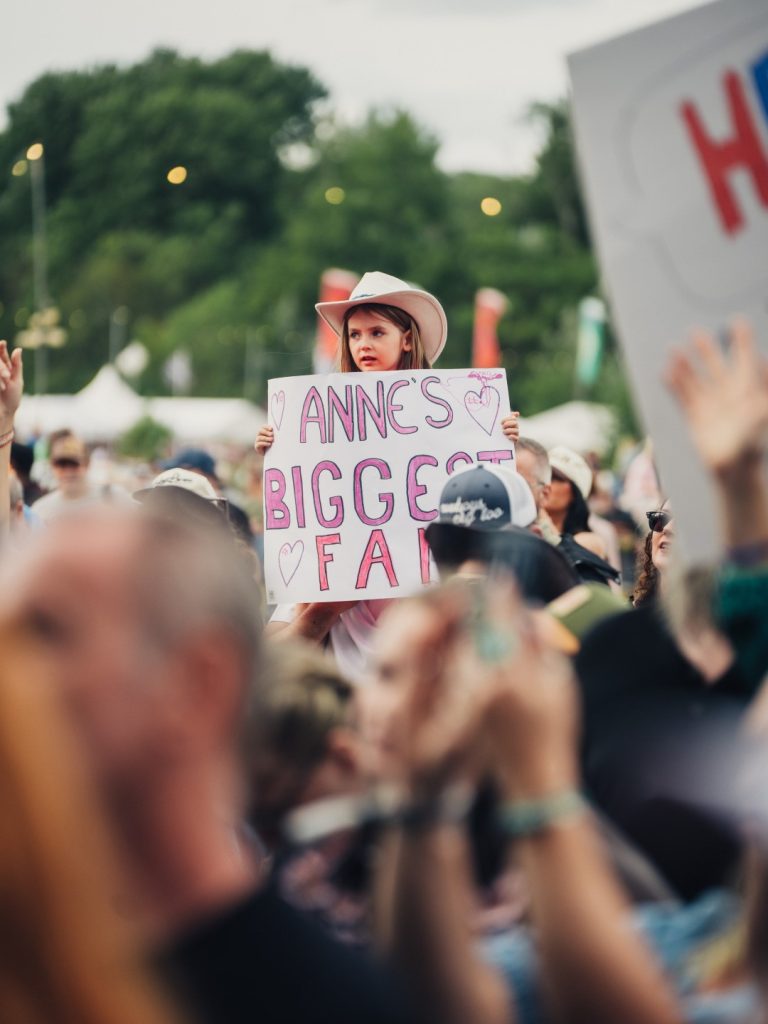
Afterwards, the organisers sent a message beginning simply: “Thank you for being there.”
They wrote about couples forming relationships, an engagement during the weekend, two fans driving from Madrid, people arriving alone and leaving having found their tribe, families creating traditions and the army of artists, volunteers, traders, crew and partners required to create the festival.
It would be easy to dismiss that as sentimental festival sign-off.
Except that it gets surprisingly close to explaining why The Long Road has worked.
Country music’s growth in the UK is usually measured through chart positions, arena tours, streaming numbers and the increasing frequency with which Nashville stars cross the Atlantic.
Those things matter.
But a healthy music scene also needs somewhere for the people who care about it to meet one another. It needs somewhere a new British artist can play a small stage and imagine reaching the main one. Somewhere established musicians mix with newcomers. Somewhere fans discover an artist they hadn’t heard of when they arrived.
For four days each summer, Stanford Hall provides that place.
The stages have now come down, the fields will recover and the boots will eventually lose their mud. But The Long Road has already confirmed its return to Stanford Hall from 26–29 August 2027. Early Bird Tickets are on sale now, for a limited period.
After its biggest edition yet, the challenge will be to keep growing without losing the intimacy and community that made people fall for it in the first place.
Because after The Long Road 2026, the most memorable thing wasn’t necessarily any single headline performance.
It was the feeling that, for one Bank Holiday weekend in Leicestershire, a large part of the UK country community had found its way home.
Photos by AlexanderWard, DianaDumi, NiamhLouise, GeorginaVincent

