
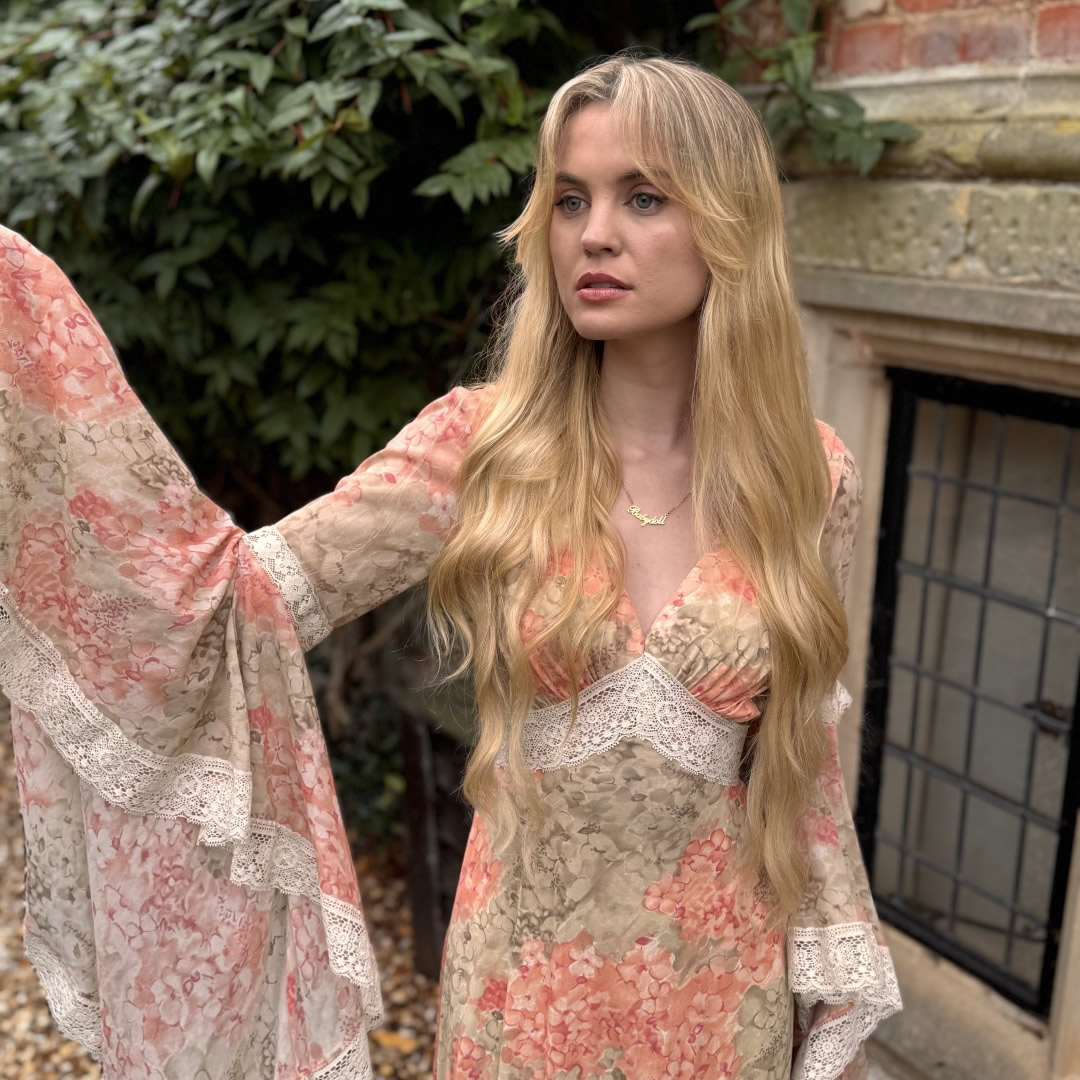
For Zandi Holup, a song is never simply a song. It can be a memory, somebody else’s story entrusted to her care, a snapshot of an emotion she may never experience in quite the same way again. Once it leaves her hands, it becomes something else too: an opportunity for another person to recognise part of themselves in it.
That idea runs through our conversation at The Long Road, where the Pennsylvania-born singer-songwriter is reflecting on the year since the release of her debut album, Wildflower. It was an intensely personal introduction, built around the qualities that make Holup distinctive rather than attempting to polish them away, and she has now had time to discover what happens when those songs become part of other people’s lives.
Perhaps the biggest surprise has been Mary Jane, a deeply poetic account of someone close to Holup who experienced heroin addiction and ultimately became sober.
“I wasn’t sure how many people were going to latch on to it,” she admits. “But so many people have related to it and either know someone who’s been through it, they’ve been through it. It makes my soul happy that people are connecting to it.”
Learning to embrace imperfection
That connection matters because Holup has spent years learning that the qualities we are most inclined to hide can sometimes be the ones that other people respond to most strongly.
“I think things that I used to feel ashamed of with my own voice, and even as myself as a person, people have embraced about my voice and me,” she says. “So I’m learning that the things that I might be embarrassed of and ashamed of are the things that other people love. So embrace your imperfections.”
It is easier said than done. Holup readily acknowledges the tension between that philosophy and her own perfectionism, something that made recording Wildflower difficult at times. Yet there is something fitting about an album that celebrates imperfection being made by somebody who still has to make a conscious effort to accept it.
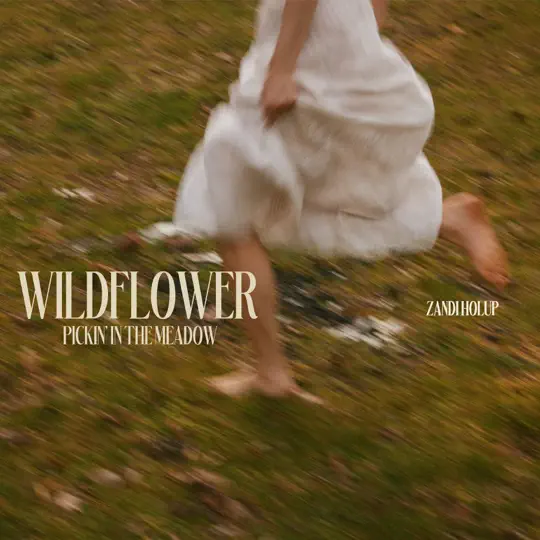
The stripped-back Wildflower: Pickin’ in the Meadow sessions offered an unexpected release from some of that pressure. Playing live with her band meant there was less opportunity to analyse every detail as it happened, allowing her to rediscover songs she had already spent countless hours shaping.
“It allowed me to think less and kind of let the songs breathe,” she explains. “I think songs can be reimagined over and over and over again. I could record those songs again in a completely different way and they’d sound like different songs.”
Meet Zandi Holup
From: Pennsylvania, now based in Nashville
Sound: Folk-country built around poetic, deeply personal storytelling
Debut album: Wildflower, released in August 2025
Key songs: Mary Jane, Gas Station Flowers, Go Find Less, Dirty Wings and Wildflower
Also listen to: Wildflower: Pickin’ in the Meadow, a stripped-back companion project which includes her reworking of Juice WRLD’s Lucid Dreams
UK connection: First visited for C2C in 2024 and returned in 2026 to play The Long Road
What’s next: Zandi says she is working towards another album, with plenty of new music on the way.
When somebody else’s life becomes a song
If accepting her own imperfections requires trust, writing about other people demands a different kind of vulnerability. Mary Jane is based on the experience of a friend, and Holup doesn’t pretend there is a simple rule for deciding where an artist’s right to tell a story begins and another person’s privacy ends.
“I have run into problems with close people in my life that have been offended or nervous about songs written about them,” she says. “I do the best I can to conceal people’s identities.”
What makes her answer particularly revealing is her refusal to simplify the people who find their way into her songs. Someone doesn’t have to become the villain simply because they caused pain.
“I think two things can be true. Someone can have hurt you and someone can have also loved you.”
With Mary Jane, however, her intention was different. Rather than documenting a grievance, Holup wanted to honour what her friend had endured and the journey they had made towards sobriety.
That sensitivity doesn’t mean she can control how a song will be received. Holup admits that she is affected by people’s reactions “more than I would care to admit”, but she has also learnt to see a song as something fixed to a particular emotional moment rather than a permanent declaration.
“At the end of the day, it’s just me taking my soul and it’s only a moment in time, a moment of emotions that I’m feeling, and I put it into a thing,” she says. “That song is that little fragment of feeling that I had at that time.”
It is an unusually poetic way of describing songwriting, but throughout our conversation Holup repeatedly returns to the language of souls, feelings and emotional exchange. For her, those ideas aren’t abstract. They are the reason for doing this in the first place.
Making a selfish career selfless
Holup first developed an audience by sharing demos and fragments of songs online, where the distance between songwriter and listener can be reduced to a phone screen. Performing those songs in front of people offers something altogether more tangible.
“I love to see people’s reactions,” she says. “For me, just being able to touch somebody and make someone feel something is the reason that I do this.”
She is also acutely aware of the apparent contradiction involved in being a performer who wants the experience to be about somebody other than herself.
“I try to do the best I can to make a selfish career be as selfless as I can.”
“At the end of the day, I’m standing on a stage with lights on me saying, ‘Look at me.’ But how can I make that not about myself?”
Her answer is to look back. Rather than treating an audience as a mass of people watching her, she tries to notice the individuals within it and absorb something from them in return.
“I want to take in their souls and their energy and know that what I’m doing is helping them to a degree. That’s what makes me keep going with all of this, to be honest.”
That relationship also explains why Holup has no intention of abandoning the online approach that first helped people discover her. She still shares unfinished songs and pays close attention to the response, describing the internet as “the best A&R you’re going to get”.
“I don’t really care, quite frankly, what business people think of my music,” she says. “I care what the people that are listening think of my music. Of course, it’s nice when business people like it. Yay. But honestly, what really matters is what actual listeners think of the songs.”
Why Zandi Holup loves playing in the UK
Perhaps that helps explain why Holup has developed such an affection for performing in the UK. Having first visited for C2C in 2024, she says travelling outside the USA changed her perception of just how widely country music resonates.
“I think country music exists everywhere, all around the world. That’s what it taught me,” she says. “A lot of the time in America, people don’t really see that when you’re caught in your little bubble.”
There is something else she particularly values here too: the way audiences listen.
“The way that people respect music and listen to music over here is completely different,” she says. “People care more about music. They want to enmesh themselves more with the entire experience. They don’t talk. They are very attentive and respectful.”
She laughs as she makes sure her enthusiasm isn’t interpreted as an attack on audiences back home — “I love my American audience too. Slay America” — before returning to the point: “I absolutely love playing over here. It’s just wonderful.”
For a songwriter who puts so much value on the exchange taking place between performer and listener, perhaps it isn’t surprising that an attentive audience leaves such an impression.
What grows after Wildflower?
A year on from Wildflower, Holup is already looking beyond it. Her 2026 collaboration with The Droptines on A Town Near You allowed her to step temporarily into somebody else’s creative world, something she relished precisely because it took her somewhere she might not have reached through her own writing.
There will be plenty more of her own music, though. Holup says she is working towards another album and promises “a lot of new music”, although anyone expecting her to become less personal as she moves into the next chapter may be disappointed.
“I genuinely don’t know how to write songs that are not extremely personal,” she laughs. “I overshare by nature. It’s just in my blood.”
Wherever that instinct takes her next, the fundamental purpose seems unlikely to change. Towards the end of our conversation, we return to something Holup has previously said about singing feeling as though her soul is coming out, and ask what has to happen on stage for her to walk away believing she has genuinely given an audience that part of herself.
Her answer suggests that vulnerability isn’t something that simply happens to her. It is a decision she makes each time she performs.
“You can emotionally disconnect and put up a wall,” she says. “But for me, when I’m on stage, I do try to consciously take a moment and connect with the audience and take a breath and say, ‘Hey, these people came to hear me sing, and this is such a special moment.’”
Then comes an image that could just as easily have appeared in one of her songs.
“I want to give them a piece of me, and I want to take a piece of them and make one beautiful heart.”
For Zandi Holup, that is ultimately what the imperfections, the oversharing and the deeply personal stories are for.
“I choose to give my soul every time I perform.”

