

How one of Britain’s finest roots artists found the confidence to embrace vulnerability, authenticity and the stories only she could tell..
The afternoon sunshine hanging over South London’s Country On The Common had begun to soften by the time Elles Bailey disappeared behind the stage. Out on the grass, families were still stretched across picnic blankets while country fans drifted between food stalls and the merchandise tents, but backstage there was a brief moment of calm before another performance.
Bailey has become a familiar face at festivals like this. In recent years she has quietly established herself as one of the UK’s most respected roots artists, equally at home on blues festival bills as she is at country and Americana events. It’s a career built without shortcuts; years spent touring relentlessly, releasing music independently, and allowing audiences to discover her one show at a time rather than through overnight success.
Today, however, the conversation keeps returning to one subject.
Stories.
Not simply the stories she writes into songs, but the stories people tell about themselves, the stories other people try to tell for them, and ultimately the story she has decided belongs to nobody except herself.
That idea lies at the heart of Can’t Take My Story Away, the album that many listeners regard as Bailey’s most personal work to date.
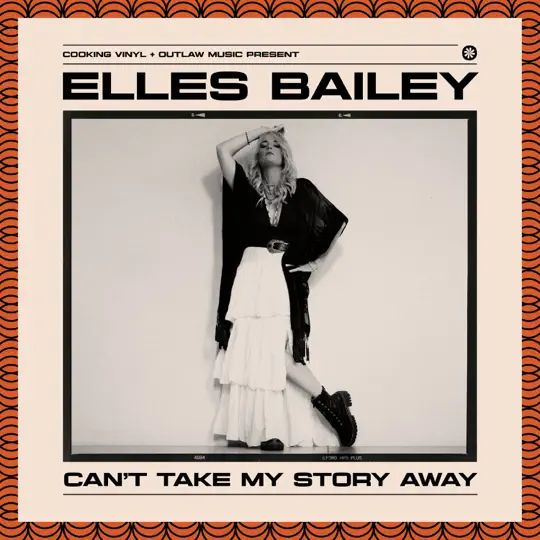
For Bailey, though, the record didn’t begin with a grand artistic statement.
It simply began with songs.
“I wasn’t even sure what it was becoming,” she says thoughtfully. “At first I thought maybe it was a single, then perhaps an EP. It was only after we’d recorded the first few songs that I realised they deserved to be part of something bigger.”
Those songs would eventually span almost a decade of writing and three years of recording, overlapping with the creation of her previous album, Beneath the Neon Glow. For a while Bailey found herself working on what would become two very different records simultaneously.
“It was quite strange,” she laughs. “I was making two albums at the same time without really intending to.”
That long gestation perhaps explains why Can’t Take My Story Away feels less like a conventional studio album and more like a memoir written in songs. Nothing feels rushed. Nothing feels manufactured. Instead, each track seems to have waited until Bailey herself was ready to tell its story.
Perhaps most surprisingly, for the first time in years she has resisted the temptation to immediately begin thinking about the next project.
“I’m actually really enjoying not making an album,” she admits. “It’s been lovely just taking these songs out on the road, letting them breathe and allowing people to discover them.”
“People will always try to rewrite your story”
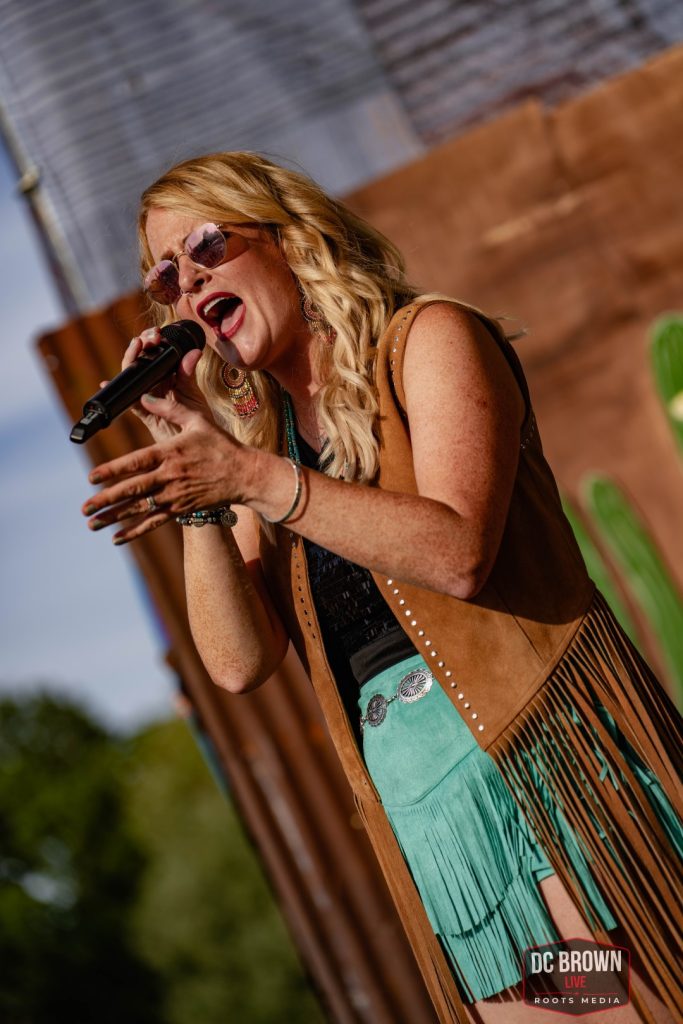
If the album title sounds defiant, that’s because it is.
Bailey speaks about it not with anger but with quiet certainty, the kind that comes from experience rather than confrontation.
“There will always be people who want to rewrite your story for you,” she says. “Sometimes they don’t even mean to. But there comes a point where you have to own everything that’s happened to you.”
For Bailey, that means accepting every chapter, not simply the successful ones.
The difficult periods.
The mistakes.
The lessons.
“The hard bits are part of your story as much as anything else,” she says. “They’re the things that helped you grow.”
It is a philosophy that feels remarkably mature in an industry often obsessed with reinvention. Rather than trying to erase the past, Bailey has built an album around embracing it.
The result is a record that feels intensely personal without ever becoming self-indulgent.
Listeners inevitably recognise fragments of themselves inside it.
That, she believes, is exactly how songwriting should work.
“There will always be people who want to rewrite your story for you. This album is about taking ownership of everything that’s happened.”
The song she almost couldn’t release
Every songwriter has one song that asks more of them than any other.
For Bailey, it was Tightrope.
The song explores her own mental health, a subject she had deliberately kept private for much of her life. Recording it was one challenge. Releasing it was another altogether.
“I’d never really spoken publicly about any of it,” she explains. “Then suddenly I was talking about it every night.”
Recognising the subject matter, Bailey partnered the album with Music Minds Matter, continuing her tradition of supporting charities alongside her releases.
Even then, performing the song live felt daunting.
When the album tour began she intended to leave it out of the set entirely.
Her audience had other ideas.
“The number of people who came up afterwards and said that song had really helped them… I realised I had to put it into the show.”
It’s one of those moments that reveals the curious relationship between artist and audience. The songs musicians often worry about sharing become the songs listeners cling to most tightly.
The Album at a Glance
- Album: Can’t Take My Story Away
- Themes: Identity, resilience, mental health, empowerment
- Written: Over approximately ten years
- Recorded: Across three years
- Charity Partner: Music Minds Matter
Growing older, growing braver
Bailey doesn’t hesitate when asked whether she’s become a more fearless songwriter.
“I think so,” she says with a smile.
“But maybe that’s just getting older.”
She jokes that her mind still believes she’s twenty-seven, despite knowing she has accumulated far more experience than that version of herself ever possessed.
That experience has fundamentally altered the way she writes.
Her early records hinted at personal emotions while often keeping listeners at arm’s length. Today’s Elles Bailey is far more willing to venture into uncomfortable places, trusting herself to emerge with songs that offer hope rather than despair.
“I’ve become better at going into the darker spaces,” she reflects, “and turning them into something positive.”
Country music has always celebrated honest storytelling, but Bailey’s version never feels performative. She doesn’t write difficult songs because vulnerability is fashionable; she writes them because they are the stories that demand to be told.
That honesty has become one of the defining characteristics of British country music itself.
Finding Britain’s own country voice
The UK country scene has changed dramatically during Bailey’s career.
Festivals have grown.
Audiences have expanded.
British artists are finding themselves on increasingly international stages.
Yet Bailey believes the most exciting development has little to do with commercial success.
Instead, it is confidence.
“I’m loving hearing country music that’s actually coming from the UK,” she says. “Songs that aren’t about trucks because somebody thinks country music has to be about trucks.”
Instead, British artists are writing about their own lives.
Their own places.
Their own experiences.
“It feels authentic,” she says.
That authenticity, she believes, is exactly what listeners respond to.
Her advice for younger artists is wonderfully simple.
“Be confident. Be authentic. Have the guts to say what you really want to say.”
“I’m loving hearing UK country music that’s talking about real British experiences. It feels authentic.”
When success isn’t measured in numbers
- Streaming figures.
- Chart positions.
- Awards.
The modern music industry offers endless ways to measure success.
Bailey ignores almost all of them.
Instead she tells a story.
While preparing to support Rag’n’Bone Man, she received a message from a fan asking whether Silhouette in a Sunset would be in the set.
It wasn’t.
The reason for asking changed everything.
“He said, ‘I want to propose to my girlfriend during that song.'”
Immediately Bailey rewrote the running order for that night’s performance.
She even filmed the proposal herself.
Thankfully, the answer was yes.
As stories of career highlights go, it says everything about Bailey that this one has nothing to do with record sales.
“When someone chooses your song for one of the most important moments of their life,” she says, “what greater compliment could there be?”
For Bailey, that is success.
Not fame.
Not headlines.
Connection.
Elles Bailey’s Listening List
- Dream collaborator: Brent Cobb
- Current UK recommendation: Demi Marriner
- Song she wishes she’d written: Angel from Montgomery
- Unexpected favourite live track: How Do You Do It
The songs that almost never happened
One of Bailey’s favourite moments in her current live show almost disappeared before anyone had heard it.
How Do You Do It was originally destined for bonus-track status.
Like many songwriters, Bailey invariably finishes more songs than will fit on an album.
This one almost didn’t make the cut.
It was fellow British country artist and band member Demi Marriner who persuaded her otherwise.
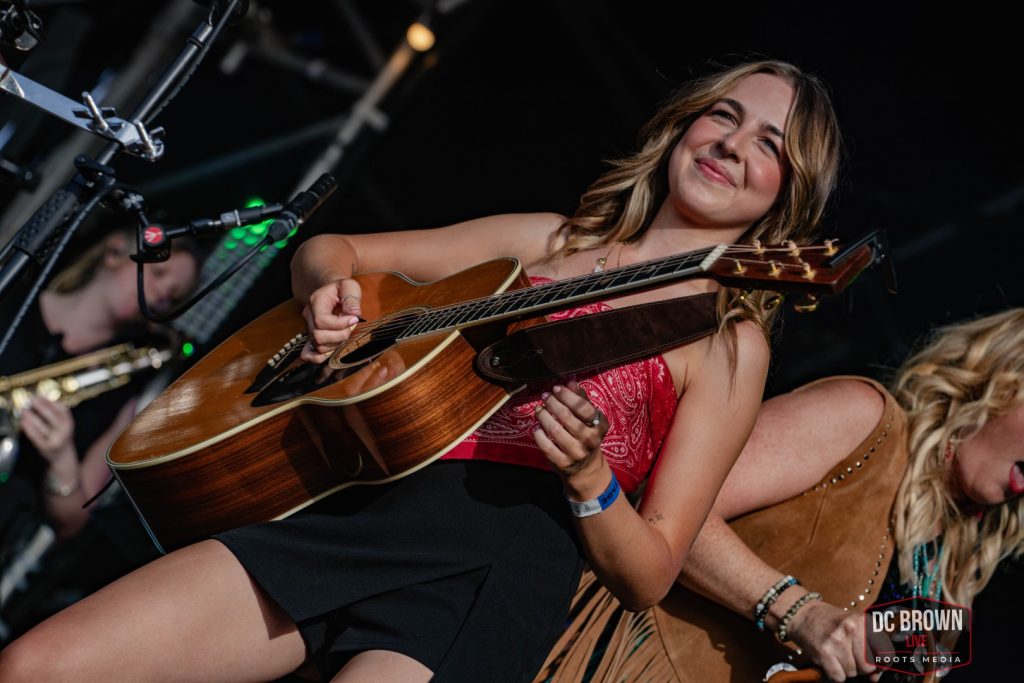
“I started looking at it through other people’s eyes,” Bailey recalls. “Then once we played it live, it became one of my favourite moments in the set.”.
It’s another reminder that artists don’t always know which songs will resonate.
Sometimes listeners hear possibilities long before the songwriter does.
Enjoying the ride
One phrase keeps returning throughout the conversation.
Enjoy the ride.
It happens to be the title of one of Bailey’s songs, but it also seems to function as her personal philosophy.
“There isn’t really a destination,” she says.
Perhaps that’s an unusual outlook in an industry driven by ambition.
Yet Bailey speaks with the calm confidence of someone who understands that careers aren’t built around individual milestones but around hundreds of small moments that gradually become a life.
Playing festivals like Country on the Common.
Watching audiences discover new songs.
Standing backstage as the evening sun begins to fall across the Common.
Touring with Rag’n’Bone Man.
Hearing someone tell you that one of your songs helped them through a difficult period.
These are the moments she chooses to remember.
Even after releasing three albums in five years while raising a young family, Bailey feels no urgency to rush into the next chapter.
“I’m writing,” she says. “But I’m not putting any pressure on myself.”
After everything this album has demanded emotionally, perhaps allowing the songs time to breathe is exactly what both artist and audience need.
Because Can’t Take My Story Away isn’t simply an album title.
It’s a declaration.
It acknowledges that every difficult experience, every triumph, every setback and every lesson forms part of a story that belongs to the person who lived it.
Nobody else gets to edit it.
Nobody else gets to rewrite it.
And judging by the response Bailey receives night after night from audiences who see their own lives reflected in these songs, it’s a story that still has many more chapters left to tell. Tickets for the Can’t Take My Story Away Tour are available now.
With thanks to DC Brown for permission to use his photography.

