
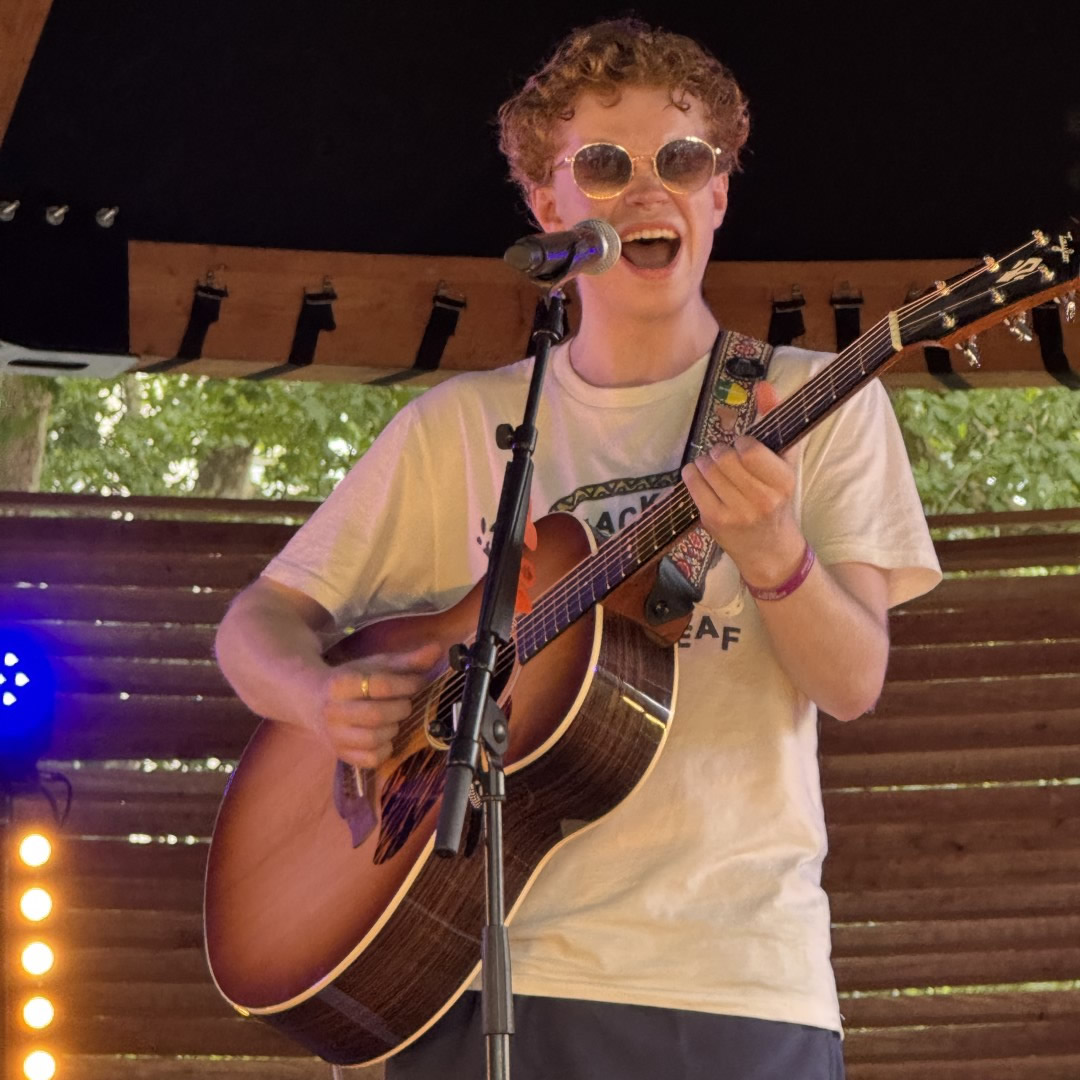
McGrath had a slightly strange recommendation for CountryMusic.co.uk.
We were talking at BST Hyde Park, in the middle of what the Donegal-born singer-songwriter described as the biggest weekend of his career so far. His first two singles, “Rotha” and “Burn Daylight”, were out in the world, his distinctive voice was beginning to travel well beyond Ireland and, over the course of a few remarkable days, he had gone from opening for Mika at The Mount at Wasing to playing Hyde Park, with another appearance at State Fayre still to come.
So we asked him a simple question. If a UK country fan had never heard McGrath before, which song should they start with?
Not “Rotha”. Not “Burn Daylight”.
“I would say the song that I’m releasing next,” he said.
It was called “Home”, and at the time there was one obvious problem with his answer: nobody reading the interview could actually go away and listen to it.
“Stay tuned,” he smiled.
We did, and since our conversation “Home” has been released, giving listeners the chance to discover why McGrath was so certain that this was the song he wanted country fans to hear. It turns out to be a revealing choice, not simply because of the Travis-picked guitar that he thought might appeal to that audience, but because the song gets remarkably close to the heart of the artist he is becoming.
McGrath is going places, and going places has made him think increasingly about the one he left behind.
“I think I never realised how special Donegal was… it really, really resonated with me when I moved to Belfast“
You have to leave to see it
McGrath — real name Mick Russell — grew up in County Donegal and is now based in Belfast, but music was part of his landscape long before anyone started talking about careers, singles or festival stages. His parents played music around the house, stories were told and traditional sessions were part of the culture around him, creating the kind of musical education that happens almost by osmosis.
“I think it’s instilled in us from a very young age,” he tells us when we ask why Irish storytelling appears to connect so naturally with British country and Americana audiences. “There has historically been such an effort to preserve the culture, that it’s a real point of pride for Irish people. And I think that resonates with a lot of people.”
For McGrath, though, understanding the importance of where he came from required a little distance. Moving to Belfast didn’t weaken the connection with Donegal; instead, it seems to have brought it into sharper focus, allowing him to see something that had been difficult to recognise while he was surrounded by it every day.
“I realised how special Donegal was,” he says. “I realised that all my life, but I think it really, really resonated with me when I moved to Belfast.”
There was another clue in the reactions of the people he met. Tell somebody you’re from Donegal, McGrath discovered, and something happens.
“People’s faces light up when you tell them that you’re from Donegal.”
It is a small observation, but perhaps that is precisely why it matters. Sometimes our understanding of home is shaped not by leaving it altogether, but by seeing it reflected in somebody else’s response, and Belfast gave McGrath both that perspective and something different to build upon. He became involved with musicians in the city and found a scene characterised, as he describes it, by “a real feeling of pride and ambition”.
Donegal and Belfast have therefore come to occupy different but complementary places in his development: one carrying the memories, stories and musical culture of his upbringing, the other offering a community in which those influences could begin to develop into something of his own.
“I think that both Donegal and Belfast, they’ve played their individual roles in shaping me into the artist that I am,” he says. “I think they’ll continue to do that.”
DONEGAL → BELFAST: TWO PLACES SHAPING McGRATH
Donegal gave him the stories. Music in the family home, traditional sessions and a strong sense of Irish cultural identity all became part of McGrath’s musical vocabulary long before he began releasing records.
Belfast gave him a new perspective. Moving away made him appreciate Donegal differently, while immersing himself in a music scene he describes as full of “pride and ambition”.
Somewhere between those two places, McGrath is discovering what kind of songwriter he wants to become.
Then everything started moving
If moving to Belfast gave McGrath some distance from home, the past couple of years have carried him considerably further, and at a speed that he still seems to be processing.
His journey from playing locally in Donegal led eventually to an extraordinary opportunity with George Ezra, while more recently there have been support slots with artists including Jack Van Cleaf and Mika. By the time CountryMusic.co.uk catches up with him, he is standing amid the considerable machinery of BST Hyde Park, contemplating a weekend unlike anything he has previously experienced as a performer.
“It means a hell of a lot,” he says. “It’s the biggest weekend of gigs that I’ve had in my career this far. And it’s just a privilege and absolute pleasure to be here.”
There are plenty of artists on the bill he wants to see, but one name comes immediately to mind.
“It’s gotta be Garth. It’s gotta be Garth,” he says, with Zac Brown Band also high on his list.
What seems to have made just as much of an impression, however, is the atmosphere surrounding the event. For all the scale of Hyde Park and the stature of the names around him, McGrath describes the day in unexpectedly gentle terms. “It’s just been a very wholesome day so far,” he says. “Everybody’s been very kind.”
The previous day had brought another experience that clearly lodged in his memory. Opening for Mika at The Mount at Wasing, McGrath found himself on a huge stage looking towards a bank rising naturally in front of him, the whole scene enclosed by woodland. When we ask about the most unusual venue he has performed in, his thoughts return immediately to that setting.
“It was almost like a natural sort of amphitheatre in a way,” he remembers. “It was really special.”
The contrast with where the journey began is difficult to ignore. A singer who built his early experience in Donegal suddenly finds himself performing in forests and at Hyde Park, surrounded by artists whose careers operate on an entirely different scale. Yet at almost exactly the moment his own world is beginning to expand, one of his most important new songs is pulling him back towards where he started.
“It’s the biggest weekend of gigs that I’ve had in my career this far.”
The song he wanted country fans to hear
When McGrath told us that “Home” should be the starting point for country listeners, his reasoning wasn’t primarily about fitting himself into a genre. What interested him most was the story behind it, and the complicated realisation that the place where he grew up had become more precious precisely because he could no longer be there as often as before.
“It is about realising how amazing the place that I grew up in is,” he explains, “and the sort of frustration around not truly realising how special a place is until you move away. And you can’t be there as often.”
There is, however, something in the musical language of the song that he believes country listeners will recognise. “It’s kind of got that Travis-picking country sort of guitar style playing,” he says, “which I threw myself into a few years ago. And I love very much.”
Since our interview, “Home” has made the transition from the song McGrath was excitedly promising us to one listeners can hear for themselves, and its arrival makes his recommendation easier to understand. The place at the centre of the song is distinctly his, but the emotion is considerably less geographically specific: the discovery that distance can transform somewhere familiar into somewhere you suddenly understand you belong.
That idea hardly needs translating for a country audience. Country music has spent generations finding new ways to leave home, miss it, idealise it, return to it and sometimes discover that the version carried around in memory no longer quite exists. McGrath approaches the subject from Donegal, but the emotional territory is instantly recognisable.
WATCH: McGRATH — “HOME”
When CountryMusic.co.uk spoke to McGrath, “Home” had yet to be released, but he was already convinced it was the song UK country fans should hear first.
Now we can find out why.
Where does McGrath fit?
If “Home” offers country listeners an obvious route into McGrath’s music, it would be a mistake to assume it provides a convenient definition of everything he wants to do. His second single, “Burn Daylight”, points somewhere rather different, exploring loneliness, distance and the ache of separation through a dreamier, more experimental atmosphere.
The contrast with “Rotha” was deliberate, because McGrath has little interest in using his first handful of releases to establish a formula and then repeat it. Instead, he wants his debut EP to demonstrate some of the range of music that interests him, even if that means asking early listeners to trust that apparently disparate ideas will eventually belong together.
“For me it was important to have a bit of an eclectic mix in my first EP,” he explains. “It’s interesting, slightly experimental. It’s nice to see what resonates with people and who likes what, I suppose.”
Then comes a line that says rather more about his confidence in the wider project than any attempt at genre classification could.
“I think that the contrast will make more sense in time.”
For now, perhaps that is enough. There is Irish folk in the foundations and a recognisable country sensibility in “Home”, while elsewhere McGrath is willing to reach towards much more atmospheric territory. His influences are similarly broad: he speaks with enormous enthusiasm about Jack Van Cleaf, whom he had recently supported in London, and singles out the quality of his lyricism, while Imelda May has also played an important role in his musical development.
Closer to home, he points towards the country and bluegrass tradition around Donegal, a reminder that the relationship between Irish music and country is not simply an historical one preserved in old record collections. It continues in pubs, local sessions and communities where songs and playing styles pass between musicians without anybody necessarily stopping to decide which side of a genre boundary they belong on.
McGrath appears comfortable with that ambiguity. Rather than deciding whether the folk singer, country guitarist or more experimental songwriter should ultimately win, he seems more interested in discovering what happens when they are allowed to coexist.
The joke is part of the story
There is another part of McGrath’s Irish inheritance that he is rather less philosophical about. Asked what British audiences might not realise is particularly Irish about him, the answer arrives quickly: “My sense of humour.”
It is an amusing response, but humour also has a more serious place in the songwriting tradition he admires. When we ask whether he is naturally more interested in making listeners laugh or making them think, the question itself produces a laugh — “That’s making me think” — before he eventually settles on the latter and reaches back towards the Irish folk song “Arthur McBride” to explain why.
“There’s humour within that song that really makes people think,” he says. “I just think that I maybe subconsciously have that in the back of my mind whenever I’m writing songs.”
That “subconsciously” is revealing, because McGrath rarely sounds as though he is consciously assembling an artistic identity from an approved list of influences. The music, stories and humour he grew up around appear to have lodged somewhere deeper, emerging naturally when he writes rather than being summoned because a song requires an Irish reference point.
It also helps explain why the question of authenticity matters so much to him. At this stage in a new artist’s career there can be considerable pressure to decide quickly what the project is, who the audience might be and which successful artist provides the most useful comparison. McGrath’s instinct seems to be moving in the opposite direction: the more he trusts the things that are naturally his, the more likely somebody else is to recognise something of themselves in them.
When strangers hear themselves in your songs
That process has already begun. The response to “Burn Daylight” brought messages from people McGrath had never met, and he still speaks about those encounters with the slight astonishment of somebody for whom an audience has not yet become an abstraction measured primarily in streams, followers and engagement.
“Heartwarming, absolutely wonderful,” he says when we ask how the song has been received. “Getting messages and feedback from people that I’ve never met is just, it’s unbelievable.”
There is something significant in that experience for a songwriter whose music is becoming increasingly personal. A song begins with one person’s memory, loneliness or sense of place, but releasing it requires surrendering control over what it will mean once somebody else hears it. The stranger sending McGrath a message may not have lived his experience at all, yet something in the song has provided enough recognition for them to make contact.
“I’m very new to this,” he admits, “so to get that feedback, it just spurs me on. It makes me want to keep going.”
Perhaps that is why, when we ask about the most important lesson he has learned since releasing his first music, McGrath doesn’t talk about performing, promotion or any of the practical realities that have accompanied the rapid expansion of his career. Instead, he returns to something much more fundamental.
“The importance of being yourself,” he says. “And how the most authentic version of yourself is more than likely the idea that’s going to resonate with people.”
“The most authentic version of yourself is more than likely the idea that’s going to resonate with people.”
For an artist whose first few songs are already resisting easy classification, that feels less like a piece of generic advice than an emerging creative principle. “Home” doesn’t need to turn McGrath into a country artist any more than the atmosphere of “Burn Daylight” requires him to abandon the traditions that shaped him. If those different elements are genuinely part of the same person, perhaps the task is not to tidy them up for an audience but to become better at expressing them.
Soon, his name is above the door
There is, however, a difference between being welcomed onto a big stage and discovering whether you can fill a smaller one yourself, and that is the challenge waiting for McGrath as the year draws towards its close. Much of his remarkable progress so far has come through opportunities to step into audiences assembled around somebody else: George Ezra invited him to support, he opened for Jack Van Cleaf in London, Mika took him to the extraordinary surroundings of Wasing, and at Hyde Park he found himself sharing a bill topped by Garth Brooks.
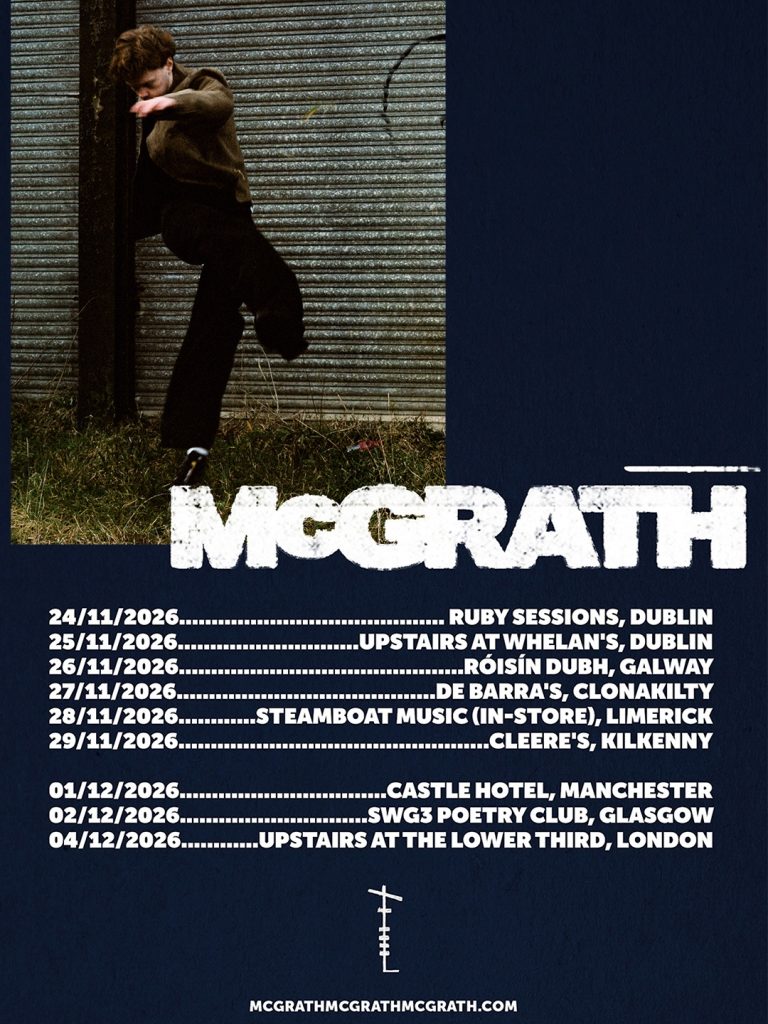
In November and December, his name moves to the top of the poster as McGrath heads out across Ireland and the UK for his own headline shows, including London on 4 December. For all the obvious excitement surrounding that milestone, it introduces a different kind of vulnerability. There is no established artist waiting in the wings and no festival audience already gathered in front of the stage; the people in those rooms will have chosen to spend their evening with him.
McGrath seems perfectly aware of the distinction, although when we ask what he would like to have achieved by the next time we speak, he characteristically turns the most immediate measure of success into a joke.
“Some ticket sales,” he says, laughing.
The humour works because there is a serious ambition underneath it. Support slots and festival invitations have already provided plenty of evidence that people within the music industry believe McGrath is worth hearing, but a headline tour asks a rather more direct question: have enough of those encounters turned curious listeners into people prepared to buy a ticket?
THIS TIME, THEY’RE COMING FOR McGRATH
McGrath’s first headline run takes him through Ireland and the UK during November and December, including his London show on 4 December.
After a year of stepping onto stages alongside established artists, these dates bring a different challenge: building rooms of his own.
Asked what he wants to have achieved by the next time we meet, McGrath laughs: “Some ticket sales.”
Behind the joke is a simple ambition — to release more music and spend time playing “some lovely intimate venues”.
Full tour details and ticket links are available on CountryMusic.co.uk.
Those intimate rooms feel appropriate for where McGrath is now. They are large enough for the growing audience around him to become real, but small enough that the connection he describes when strangers send him messages can still exist face-to-face. His ambitions aren’t framed in terms of racing towards arenas; what he talks about instead is selling some tickets, releasing more music and being present in venues where the songs can do the work.
There is plenty of music waiting beyond the tour too. At the time of our conversation, McGrath told us that his debut EP was finished and that another single would arrive before its release, while his ambitions already stretched far enough ahead that he hoped to have a second EP “in the bank” by the time we next spoke.
The speed of that creative momentum raises an obvious question about where those future songs might take him, particularly for an artist who is beginning to find an audience among country listeners.
Nashville, perhaps?
McGrath doesn’t need much persuading when Nashville enters the conversation. The possibility has already been discussed within his circle, and he has collaborated with people who have spent time there and returned enthusiastic about the experience.
“Oh, definitely,” he says when we ask whether he could imagine writing there. “It’s definitely a shiny object for me at the moment.”
The phrase suits where he is in his career. Nashville is not yet a plan that requires flights and diary dates; it is an intriguing possibility sitting somewhere beyond the immediate business of releasing music and playing his first headline shows. Yet it is also easy to understand the attraction for a songwriter increasingly interested in the relationship between place, storytelling and the musical traditions he has absorbed.
There is an appealing symmetry in imagining somebody who needed to move from Donegal to Belfast before fully understanding what home meant travelling several thousand miles further away to write songs. Whether Nashville would pull McGrath towards country music, push him somewhere unexpected or simply make the Irishness of his writing more obvious is impossible to know, and that uncertainty is considerably more interesting than trying to predict the outcome.
For the moment, though, another part of his answer about the future feels more important.
When McGrath imagines where he would like to be by the next time CountryMusic.co.uk speaks to him, he naturally mentions the music: the first EP released, the second already prepared and, with a laugh, those hoped-for ticket sales. But he also wants “to continue to nurture the friendships and relationships that I have at the moment and to have made new ones”.
It is an unexpectedly revealing ambition at a point when almost everything around him appears to be encouraging movement. Bigger opportunities mean more travel, new cities, unfamiliar stages and more people entering the orbit of a career that did not exist in quite this form very long ago. McGrath wants all of that, but apparently not at the cost of the relationships that existed before it.
Which brings us, inevitably, back to “Home”.
The song McGrath chose for country fans before they were able to hear it turns out to contain a question that reaches beyond Donegal. What happens when the life you wanted begins taking you away from the people and places that helped make you capable of pursuing it in the first place?
McGrath is still much too close to the beginning to know the answer. Hyde Park remains sufficiently new to feel extraordinary, messages from strangers still surprise him, his own headline tour is something to be genuinely excited about and Nashville remains, in his wonderfully uncomplicated description, a “shiny object” somewhere in the distance.
What he does know is that leaving Donegal changed the way he saw it. Distance made familiar things visible again, and those things have started finding their way into songs which are now travelling considerably further than the person who wrote them might once have imagined.
For all the attention that will inevitably fall on where McGrath goes next, that may be the more interesting story to follow. His career is beginning to carry him out into a much bigger world, just as his songwriting is teaching him to look more closely at the smaller one he came from.
The further he goes, in other words, the more clearly he seems to see home.

